Introduction & History
The current Club was formed in 2014, continuing the legacy of an earlier club of the same name founded in 1990 by Michael Smith Turnbull, who sadly passed away in 2014.
Mick was a true Yorkshireman and countryman, with a deep knowledge of flora and fauna and a strong sense of purpose. Throughout his life he worked in the countryside, first as a gamekeeper on large estates and later as a Fisheries Officer with the Environment Agency. In 1990, Mick approached Hugh Murray Wells and established the club on approximately three miles of the River Rye downstream of Ness Hall in North Yorkshire. In 1993 he secured a further lease from the Nunnington Estate, adding water immediately upstream of the Ness beats.
Our clubhouse at Ness Hall was originally the estate blacksmith’s workshop—an impressive stone building with a slate roof, now equipped with electricity, water and a multi-fuel stove. While beat booking and catch recording are now carried out exclusively through our online system, the clubhouse remains the social heart of the club and a base for equipment storage and working party gatherings. On winter mornings in February and early March, members gather there for coffee before heading out to carry out essential river maintenance, clearing debris left by winter floods, and managing overhanging vegetation.
Over the years the original club grew to around 50 members. Today’s club remains of a similar size and continues to reflect a wide range of occupations and backgrounds. While still predominantly male, we recognise the need to broaden participation and welcome anyone with an interest in fly fishing and river conservation. It is a club where members share knowledge, experience and companionship, as well as a passion for fishing.
Today the Club combines traditional values with a modern, well-managed approach. Membership is intentionally limited to maintain uncrowded fishing and protecting the quality of the river. Beat availability and catch returns are managed through an online system, allowing fair access and providing valuable data to support stock management and long-term conservation. The Club places strong emphasis on habitat care, responsible stocking and environmental monitoring to ensure the River Rye remains a healthy and sustainable fishery for future generations.
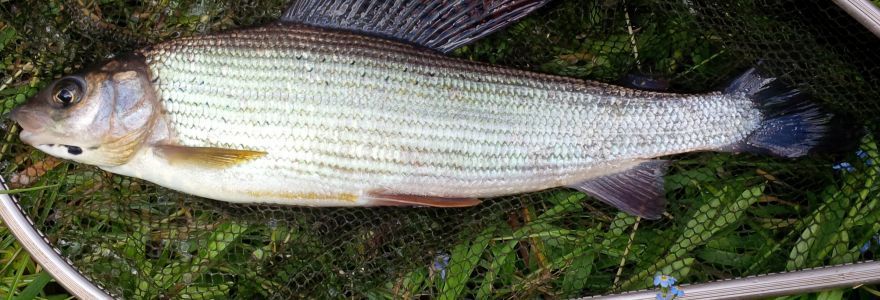
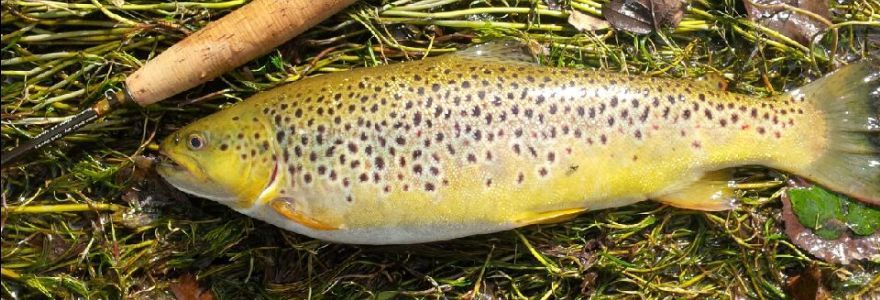
The character of the River Rye changes along our five plus miles of water. It flows through rich agricultural land, bordered in places by willow and alder, while on the lower beats—particularly Ness Beat 3—the river cuts a deeper channel through softer ground. The river holds a healthy population of wild brown trout and resident grayling, together with dace, chub, eel, pike and the occasional barbel, with coarse fish more common on the lower sections.
To maintain good sport, the club supplements the wild stock with locally sourced, triploid brown trout of 11–13 inches, stocked annually and distributed along most beats, excluding the lower waters.
The presence of white-clawed crayfish and strong grayling populations indicates the good health of the river, a status supported by regular kick-sampling undertaken by members and submitted to a national monitoring database. The Environment Agency also carries out periodic fish surveys. Otters are occasionally seen and, as Mick used to say, “If you have fish, you will have otters—and if there are otters, it means there are fish.” The river valley also supports abundant wildlife, including kingfishers, which are always a welcome sight.
Fishing is restricted to upstream dry-fly and nymph methods. Wading is permitted (except during the winter grayling period), but members are encouraged to exercise discretion for both personal safety and to minimise disturbance to the riverbed and its ecology.
John Ditch
Chairman